

The European Heritage Project by Peter Löw
  • About
    • THE INITIATOR
    • THE COMMITTEE
  • Strategy
    • RESTRUCTURING PLAN
    • THE CHARTER
  • Projects
    • The Projects
    • Project Overview
    • Chronology
  • Experience
  • News
  • EN
    • DE
    • FR
    • IT
  • Search
  • Menu Menu

In the morning, we took a long drive to Hugstetten. From a hill in the castle gardens, we had a sweeping view of the mountains. We could see the Feldberg, Belchen, and Kandel right in front of us.

(Based on diary entries by Felix Mendelssohn-Bartholdy and his wife Cecilie)

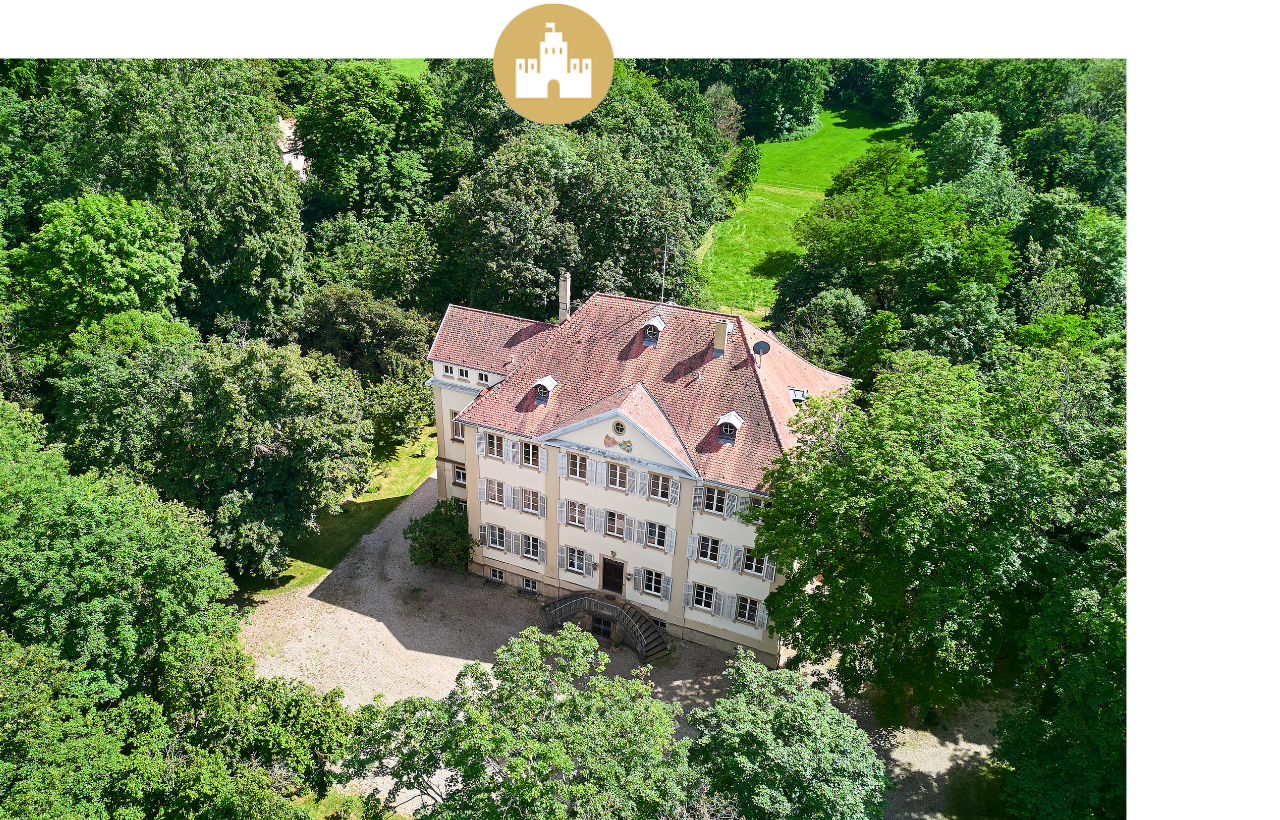
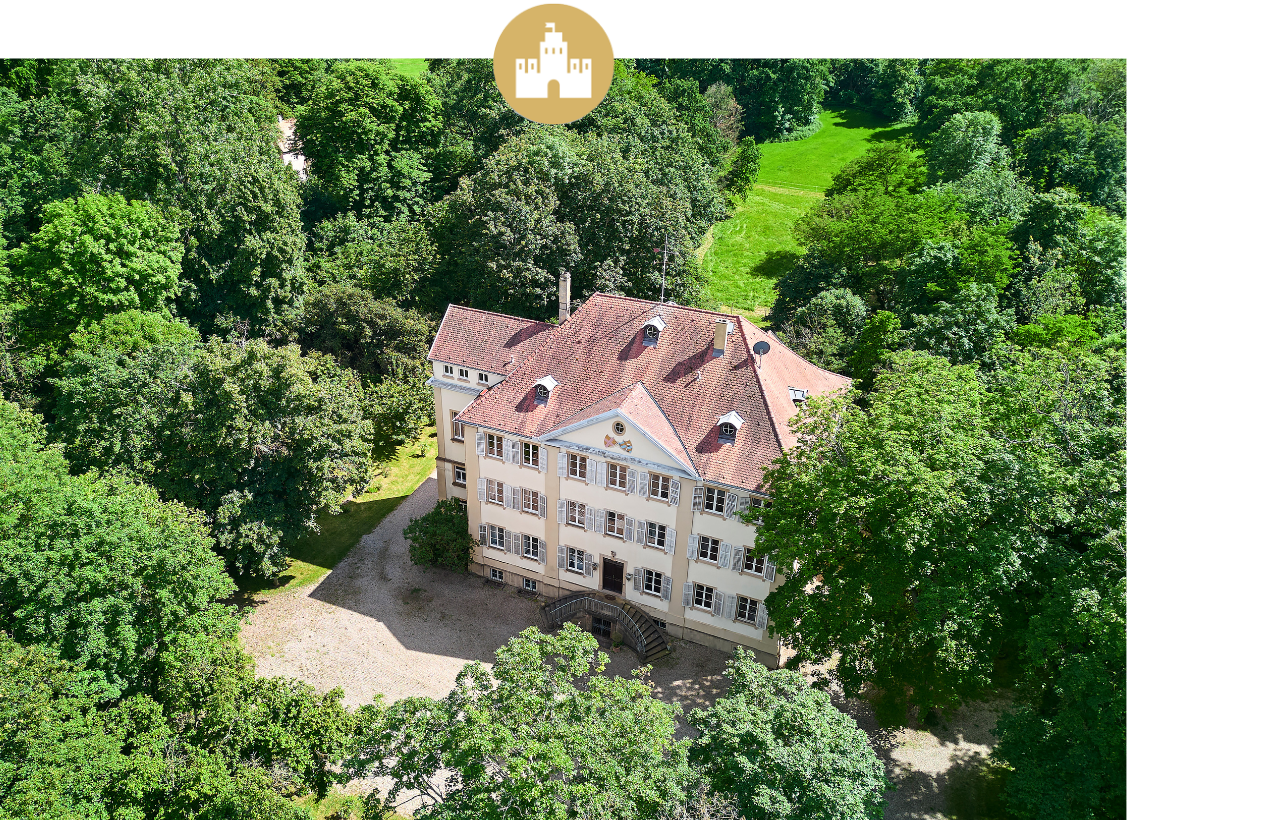
Hugstetten Castle – A place where history comes alive

Hugstetten Castle is an impressive testament to the aristocratic culture of southwestern Germany and is one of the most historically significant castle complexes in the Breisgau region. Its roots date back to the Middle Ages, but the estate took on its current form in the early 19th century in the style of southwestern German classicism. Surrounded by extensive, originally English-style landscape gardens, the ensemble combines architectural clarity with historical depth. For generations, the castle was owned by important noble families, including the von Stürtzel, Andlau-Birseck, and most recently the von Mentzingen families. To this day, it preserves not only its impressive architectural substance, but also the intellectual and cultural heritage of a long family tradition.

In 2025, EHP acquired Schloss Hugstetten from its owner Baron von Mentzingen and committed to restoring the castle and the entire castle grounds to their original condition and, in some parts, making them accessible to the general public again.

PURCHASE SITUATION

It was mid-March 2025 when the European Heritage Project received a call from Baron von Mentzingen. He wanted to put the historic Hugstetten Castle, which had been in his family for centuries, up for sale. During the previous sales negotiations, all interested parties had indicated that they wanted to either divide the property into condominiums or build modern residential complexes in the historic castle grounds.
However, such an intervention would not only have destroyed the character of the ensemble, but also erased the cultural heritage and memory of a long family tradition. Out of a deep sense of personal responsibility, the baron firmly rejected these ideas and turned to the European Heritage Project, convinced that he had found a partner who would appreciate the historical and idealistic value of the property.
After the death of his father, who had lived in the castle until the end, the baron sought a sustainable solution for the future of the property. His children now live abroad—in the United States and Switzerland—and had no interest in continuing to use or maintain the estate.
In recognition of our commitment to preserving historically significant monuments, the baron was prepared to sell Hugstetten Castle to the European Heritage Project at a significant discount compared to the other offers on the table – on condition that the ensemble would be preserved in its entirety and restored in accordance with conservation guidelines.
We emphatically agreed to this request and gave the baron our word of honor: Hugstetten Castle will be preserved as a cultural and family testimony to the past. This will allow him to return as a guest at any time, knowing that his family’s legacy will continue in a dignified manner.

HISTORY

Hugstetter Castle looks back on a long and eventful history dating back to the Middle Ages. Once owned by several noble families from Breisgau, Hugstetten came into the possession of the royal court chancellor Konrad Stürtzel in 1491. Stürtzel, who came from Franconia and had been elevated to hereditary nobility in 1488, left his mark not only in Freiburg – for example with what later became known as the Basler Hof – but also in Hugstetten, where he acquired the dominion including Buchheim, Hochdorf with Benzhausen and Holzhausen from the Schnewlin zu Landeck family.
After the Stürtzel family died out in 1790, Hugstetten passed to Heinrich Ludwig von Schackmin, Austrian lieutenant field marshal and general of the cavalry. His family had come to the Viennese court from Lorraine. After Heinrich Ludwig’s death, his nephew Franz Stephan inherited the estate, and his daughter Maria Sophia Freiin von Schackmin became the heiress to the Stürtzel property.

Conrad Carl von Andlau-Birseck and the construction of the new castle

Maria Sophia’s marriage to Conrad Carl Friedrich Freiherr von Andlau-Birseck marked the beginning of a new chapter for Hugstetten. The von Andlau family, named after the town of the same name in Alsace, had close ties to the House of Habsburg and played an important role in southwestern Germany for centuries. Conrad Carl himself was a close confidant of the Viennese court and held high political office, including as a Baden diplomat and interior minister, and after 1815 as governor general of Franche-Comté.
After fleeing and being expropriated as a result of the French Revolution, he rebuilt his family’s estates. Construction of the present-day Hugstetten Palace began in 1801 and was largely completed by 1810, finally being finished in 1830. The new castle served primarily as a rural summer residence for the family, who also lived in their city palace in Freiburg. Architecturally, there are parallels to the Andlauer Hof in Arlesheim, as well as the characteristic Andlau-Schackmin alliance coat of arms on the gable.
The castle’s English garden, first documented in 1808, deserves special mention. It was modeled on the Hermitage in Arlesheim, Switzerland’s largest landscape garden, created by Conrad Carl’s mother, and was largely completed by 1839.

The Mentzingen family and the reorganization of the estate

The further history of Hugstetten Castle is closely linked to the Barons of Mentzingen. Marie Henrike Sigismunde von Andlau-Birseck married Hermann Baron von Mentzingen in 1853. Their son Friedrich inherited Hugstetten and the associated lands. Friedrich was imperial envoy to Argentina and Morocco and later became master of ceremonies at the court of Baden. Under his aegis, the castle was extended in 1907–1909 with the addition of an eastern wing featuring a second staircase.
After the First World War, Friedrich sold off large parts of the family estates outside Hugstetten. His grandson Peter Freiherr von und zu Mentzingen later reunited the estates of Hugstetten and Menzingen. In the course of the restructuring of the 1960s and 70s, large parts of the park as well as agricultural land and farm buildings were sold. What remained was the castle, the so-called old castle with its historic outbuildings, the gardener’s house, and around four hectares of the once extensive park.
To this day, Hugstetten Castle and its grounds bear witness to the rich history of the Breisgau region and the European noble families that have been intertwined for generations. With its historical heritage, English garden, and early 19th-century architecture, the complex represents an important testimony to the cultural history of southwestern Germany and the Habsburgs.

ARCHITECTURE

Hugstetter Castle has a long history of construction. As early as the late Middle Ages, there was a fortified complex on this site, which served as the seat of power for various noble families in the Breisgau region. Parts of what is now known as the “old castle” date back to the 17th century, probably around 1670. With its massive walls and characteristic roof structure, this building reflects the architectural transition from medieval fortified and farm buildings to representative country estates.
However, Hugstetten underwent a decisive architectural change in 1801, when Conrad Carl Friedrich Freiherr von Andlau-Birseck had the new castle built in the style of southwestern German classicism. The three-story plaster building with a hipped roof and seven axes was essentially completed by 1810. It is characterized by clear symmetry, a reduced façade structure, and restrained decoration. Typical of this era is the desire to combine simple elegance with a stately effect. The front gable features the Andlau-Schackmin alliance coat of arms, which still makes the builder family visible today.
The design was based on existing properties owned by the Andlau family, in particular the Andlauer Hof in Arlesheim, and combined classicist forms with functional use as a summer residence. The farm buildings, such as the tithe barn, were given the roof profile typical of Andlau, which is a defining feature of many of their estates.
Between 1907 and 1909, under Friedrich Freiherr von und zu Mentzingen, the castle was extended with an eastern annexe featuring a second staircase. This part blends harmoniously into the existing architecture and is also marked by the Mentzingen-Liedekerke alliance coat of arms.
Together with the “old castle,” the historic farm buildings, the gardener’s house, and the red plastered surrounding wall, Hugstetter Castle still forms a cohesive architectural ensemble that brings to life its development from a medieval seat of power through Baroque and Classicist renovations to the early 20th century.

PRESENT USE

The historic living spaces on the ground floor and first floor are being used again as living spaces. The floors above are home to part of the European Heritage Project’s art collections, especially modern and contemporary artworks. The exhibition rooms also serve as a dependence of the European Heritage Project in Germany, where political discussions as well as cultural events take place on a regular basis.


CURIOSITIES

How a St. Gallus church became a Martin Luther church

Like many stately homes, Hugstetten Castle had its own castle church. This also served as the parish church for the local Catholic population. Built in 1772, the Baroque St. Gallus Church was dedicated to St. Gallus, an Irish missionary of the early Middle Ages.
For many decades, St. Gallus was the religious center of Hugstetten. The church played a special role in the annual Corpus Christi procession, which passed solemnly through the castle gardens, impressively combining liturgical tradition and village community.
St. Gallus was the heart and center of the Catholic village of Hugstetten. The church was transferred to the parish without touching the precious Baroque altar, the ornate statues of saints, or the lovingly cultivated customs. Everything remained as it was – at first.
But then came the year 1960, and with it the urge for modernity. The Catholic Church decided to build a new church on the outskirts of town. Concrete, flat roof, exposed brickwork—very much in the style of the time, which today seems more sober than beautiful.
The now abandoned St. Gallus Church was thus deprived of its function, and the Catholic community decided to sell the church to the Protestant community. Historically, Hugstetten was a purely Catholic settlement; it was only through strong immigration after the Second World War that the proportion of Protestant residents increased, leading to the formation of a Protestant community.
However, what the Catholic Church had not considered was that the new owner would not only bring a new creed with them, but also a completely new taste. Shortly after the handover of the little church, the entire interior was removed in a frenzy of activity. All that remained was a cross on one side wall. But that wasn’t all, because the new owners of the church also changed its name. The patron saint, St. Gallus, was unceremoniously removed from the annals and the church was provocatively renamed Martin Luther Church. In the meantime, church attendance in this Protestant community has declined sharply and the church is now mainly used as a venue for concerts. In any case, little remains to remind us of its former heritage.

„Teuffel’s Kitchen“

Historically, Hugstetten Castle included several hundred hectares of land and the associated buildings. These included a distillery. After agricultural operations were largely discontinued, all of these outbuildings lost their original function. Baron von Mentzingen therefore decided to lease the older distillery, along with one hectare of surrounding land. Baroness von Teuffel, whose husband had died and who was on good terms with the von Mentzingen family, applied for the lease. And so the lease agreement came about. And it was not only Baroness von Teuffel who benefited from this liaison, but also the students in Freiburg. In 1980, Baroness von Teuffel opened the “In Teuffel`s Küche” (Devil’s Kitchen) in the old distillery and the adjoining barn, a restaurant that proved very popular with students, as it not only served delicious desserts, tarte flambée, and regional specialties, but also offered students jobs in her business, which were in high demand. Baroness von Teuffel, who still lives in the distillery today and is now 92 years old, closed the business in 2007 due to her age. However, she and her son are planning to reopen the Teuffel’s Küche“ in 2026, which we are all very much looking forward to.

Videos:

Das European Heritage Project hat eine Darstellung Münchens erworben, die der Künstler Bernardo Bellotto, auch Canaletto genannt, während seiner Zeit in der Isarmetropole malte. Außerdem konnte eine Vorzeichnung und ein Stich, der wahrscheinlich kurz nach dem Bild entstand, erworben werden. Durch den Erwerb der Werke konnte das European Heritage Project den Verbleib eines Teils der bayerischen Kulturgeschichte in der Region sichern.


© Copyright - The European Heritage Project Protected as part of the UNESCO World Heritage
  • Youtube
  • Imprint / Legals
  • Data Protection Policy
Scroll to top

We use cookies on this website. Some are essential, while some help personalise content, measure usage for us to provide a better and safer experience.

Accept cookiesPersonalise cookies

Cookie and Privacy Settings


How we use cookies

We may request cookies to be set on your device. We use cookies to let us know when you visit our websites, how you interact with us, to enrich your user experience, and to customize your relationship with our website.

Click on the different category headings to find out more. You can also change some of your preferences. Note that blocking some types of cookies may impact your experience on our websites and the services we are able to offer.

Essential Website Cookies

These cookies are strictly necessary to provide you with services available through our website and to use some of its features.

Because these cookies are strictly necessary to deliver the website, refusing them will have impact how our site functions. You always can block or delete cookies by changing your browser settings and force blocking all cookies on this website. But this will always prompt you to accept/refuse cookies when revisiting our site.

We fully respect if you want to refuse cookies but to avoid asking you again and again kindly allow us to store a cookie for that. You are free to opt out any time or opt in for other cookies to get a better experience. If you refuse cookies we will remove all set cookies in our domain.

We provide you with a list of stored cookies on your computer in our domain so you can check what we stored. Due to security reasons we are not able to show or modify cookies from other domains. You can check these in your browser security settings.

Other external services

We also use different external services like Google Webfonts, Google Maps, and external Video providers. Since these providers may collect personal data like your IP address we allow you to block them here. Please be aware that this might heavily reduce the functionality and appearance of our site. Changes will take effect once you reload the page.

Google Webfont Settings:

Google Map Settings:

Google reCaptcha Settings:

Vimeo and Youtube video embeds:

Privacy Policy

You can read about our cookies and privacy settings in detail on our Privacy Policy Page.

Data Protection Policy
Adapt cookiesReject all cookies


